Cooling Tower Water Treatment Company for Commercial and Industrial Facilities
Cooling towers play a critical role in many commercial and industrial facilities, but they also require consistent water treatment to maintain reliable operation. As water evaporates, dissolved minerals, contaminants, and biological matter can become more concentrated in the remaining tower water. Over time, poor water quality can contribute to scale buildup, corrosion, fouling, and biological growth.
R2J Chemical Services provides customized cooling tower water treatment solutions designed around each facility’s equipment, water quality, operating conditions, and compliance requirements. Our approach combines water chemistry management, treatment chemicals, monitoring, cleaning, and ongoing service to help facilities maintain efficient and dependable cooling systems.
Why Cooling Tower Water Treatment Matters
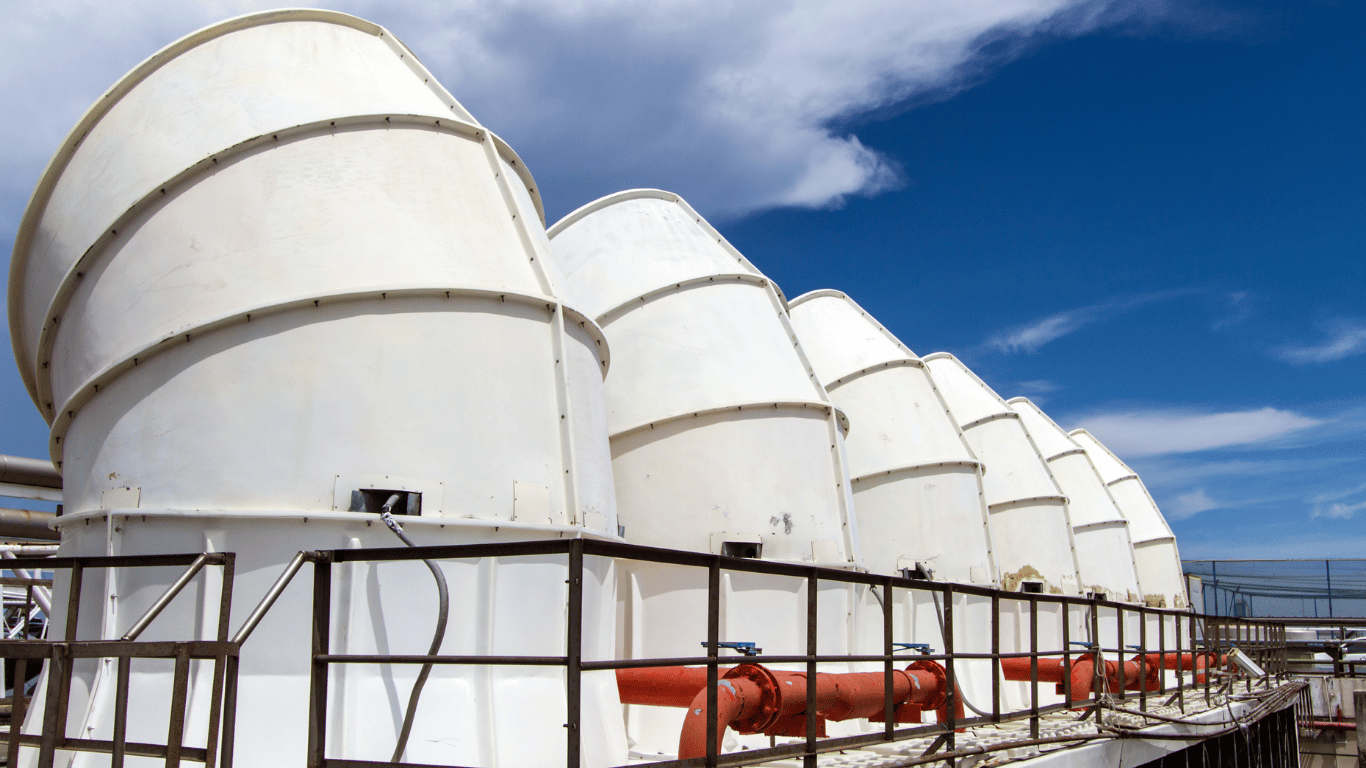
Cooling towers constantly interact with water and air, creating conditions that can accelerate water chemistry changes. Evaporation removes water but leaves many dissolved minerals behind. As concentration increases, the tower water can reach levels that encourage mineral deposits, corrosion, and other operating problems.
Hard water can make scale control particularly important. Calcium and magnesium can accumulate on heat transfer surfaces, fill, piping, and other components. Scale buildup creates an insulating layer that makes it harder for the system to transfer heat effectively. Fouling and debris can create additional restrictions that reduce system efficiency.
Corrosion creates another concern. Poorly controlled water chemistry can attack metal surfaces throughout the cooling tower and connected equipment. A suitable corrosion inhibitor, proper chemical control, and routine monitoring can help protect system components and extend equipment life.
Biological growth also requires active management. Warm, nutrient-rich tower water can support bacteria, algae, and other microorganisms. Some bacteria can contribute to biofilm, which can interfere with heat transfer and make cleaning more difficult. Cooling tower operators also need to manage the risk associated with Legionella bacteria, which can cause Legionnaires’ disease when people inhale contaminated water droplets or aerosols.
For facilities that need a broader look at biological control, our guide to biofilm control explains how treatment strategies can address biological fouling in water systems.
What Does a Cooling Tower Water Treatment Program Include?
A cooling tower water treatment program should address the actual conditions within the system rather than rely on a generic chemical package. Every facility has different equipment, makeup water characteristics, operating temperatures, metallurgy, water usage, and discharge requirements.
A comprehensive program may include:
- Water chemistry testing
- Scale and corrosion control
- Biocide treatment
- Biodispersant treatment
- Chemical dosing
- Conductivity and concentration control
- Blowdown management
- Makeup water evaluation
- Cooling tower cleaning
- Equipment inspections
- Treatment system monitoring
- Compliance support
- Routine service and reporting
Treatment chemicals can include scale inhibitors, corrosion inhibitors, oxidizing or non-oxidizing biocides, and other products selected according to the facility’s specific needs. A dosing pump can deliver chemicals at controlled rates, while automated controls can adjust treatment based on measured operating conditions.
The goal is not simply to add more chemicals. Instead, the treatment process should maintain the appropriate water chemistry while controlling scale, corrosion, and biological growth without unnecessary chemical or water consumption.
Managing Scale and Corrosion in Cooling Towers
Scale and corrosion often develop when operators allow cooling tower water chemistry to drift outside the appropriate range. As evaporation continues, dissolved solids become more concentrated. If the system does not control that concentration, minerals can precipitate and form deposits on heat transfer surfaces and other components.
Operators can manage concentration through controlled blowdown and makeup water. Higher cycles of concentration can reduce water consumption because the facility can operate with less frequent blowdown. However, the appropriate cycles depend on water chemistry, equipment design, treatment capabilities, and operating requirements.
Treatment specialists also monitor parameters such as conductivity, pH, alkalinity, hardness, chlorides, and other chemistry indicators. These measurements help identify changes before they develop into significant operating problems.
Corrosion requires a similar preventive approach. The treatment program should account for the materials used throughout the cooling system because different metals can respond differently to water chemistry. Proper chemical selection and monitoring can help reduce corrosion and protect equipment from premature damage.
Facilities evaluating their treatment technology can also review R2J’s overview of water treatment technologies to better understand how different treatment approaches address water quality challenges.
Controlling Legionella and Biological Growth
Cooling towers require careful biological control because their operating environment can support microbial growth. Legionella management represents an important part of responsible cooling tower operation, particularly in facilities where occupants, workers, or the surrounding public could encounter aerosols generated by the system.
A comprehensive program can combine chemical treatment, system cleaning, monitoring, and operational controls. Biocides help control harmful bacteria and algae, while biodispersants can help keep organic material suspended so the system can remove it through blowdown or filtration.
Chemical treatment alone cannot replace physical cleaning. Sediment, debris, biofilm, and other deposits can accumulate in tower basins and other areas of the system. Routine cleaning helps remove material that can interfere with treatment and provide an environment for microbial growth.
Facilities should also establish procedures for responding to abnormal water chemistry, treatment failures, equipment problems, and suspected biological contamination. Appropriate monitoring and documentation help facility teams identify trends and take corrective action.
R2J also provides resources on Legionella management in water safety systems for facilities looking to strengthen their approach to biological risk management.
How Water Treatment Affects Cooling Tower Efficiency
Cooling tower performance depends on effective heat transfer, adequate water flow, and proper system operation. Scale, corrosion products, biological fouling, and debris can interfere with these conditions.
As deposits accumulate on heat transfer surfaces, the system may require more energy or longer operating periods to achieve the desired cooling performance. Fouling can also restrict flow through components and create additional maintenance requirements.
Consistent water treatment helps address these problems before they become more disruptive. Maintaining appropriate chemistry, controlling biological growth, and removing accumulated deposits can support efficient heat transfer and reliable equipment operation.
Water treatment can also influence operating costs beyond energy use. Uncontrolled scale and corrosion can contribute to premature component replacement, while poor biological control can increase cleaning requirements and operational risks. A properly designed program considers the total cost of ownership rather than focusing only on the initial cost of chemicals or service.
Choosing a Cooling Tower Water Treatment Company
Selecting a cooling tower water treatment company involves more than comparing chemical prices. Facilities need a service provider that understands their equipment, water quality, operating conditions, and maintenance requirements.
Start with a detailed assessment of the cooling tower and its connected water systems. Water testing can identify hardness, alkalinity, conductivity, dissolved solids, chlorides, pH, and other factors that influence treatment requirements.
Next, review the facility’s operating history. Previous scale problems, corrosion, biological growth, high water consumption, frequent cleaning, or equipment failures can provide useful information when developing a treatment strategy.
The treatment company should then establish measurable control parameters and a service schedule. Depending on the system, this may include routine water testing, chemical adjustments, equipment inspections, cleaning, automated monitoring, and treatment reports.
Clear documentation also matters. Service reports should identify water chemistry results, chemical usage, system observations, corrective actions, and recommendations. This information gives facility teams a practical record of treatment performance and helps identify changes over time.
A qualified provider should also understand the regulatory requirements that apply to the facility and its cooling tower operations. Requirements can vary according to location, building type, discharge conditions, and applicable health or environmental regulations.
Benefits of a Customized Cooling Tower Water Treatment Program
A customized treatment program gives facility teams a structured way to manage cooling tower water quality and system performance. Instead of responding to problems after they occur, operators can establish routine monitoring and corrective measures around the system’s actual operating conditions.
Key benefits can include:
- Better control of scale buildup
- Reduced corrosion risk
- Improved biological control
- More consistent heat transfer
- Better control of water consumption
- Reduced risk of costly repairs
- More predictable maintenance
- Improved equipment reliability
- Support for regulatory compliance
- Better visibility into treatment performance
The right strategy also makes it easier to adjust treatment as operating conditions change. Seasonal demand, changes in makeup water, equipment modifications, and variations in cooling loads can all affect water chemistry.
Cooling Tower Water Treatment Services from R2J Chemical Services
R2J Chemical Services has provided water treatment solutions since 1982, serving commercial and industrial facilities with customized programs for their specific operating needs. Our approach starts with understanding the facility, its cooling equipment, its water quality, and the problems affecting system performance.
Our Certified Water Technologists can evaluate cooling tower water chemistry and develop a treatment strategy that addresses scale, corrosion, biological growth, and other water quality concerns. Depending on the system, services may include water testing, chemical treatment, automated dosing, monitoring, cooling tower cleaning, and ongoing maintenance.
The process starts with evaluating the existing cooling tower and identifying the conditions that influence treatment. R2J can then recommend an appropriate treatment program, establish monitoring parameters, implement the required controls, and provide ongoing service to keep the program on track.
For facilities considering a new cooling tower water treatment company, the most practical next step is to schedule an evaluation of the system, test the tower water, review existing maintenance and chemical programs, and identify the conditions affecting performance. R2J Chemical Services can use those findings to develop a customized cooling tower water treatment solution for your facility. Contact us today to discuss your cooling tower water treatment needs and request a professional assessment.
Frequently Asked Questions
What does a cooling tower water treatment company do?
A cooling tower water treatment company evaluates water chemistry and develops a treatment program that helps control scale, corrosion, biological growth, and other water quality problems. Services can include water testing, chemical dosing, monitoring, cleaning, maintenance, and compliance support.
Why do cooling towers need water treatment?
Cooling towers lose water through evaporation, which concentrates dissolved minerals and other contaminants in the remaining tower water. Without proper control, the concentration can contribute to scale, corrosion, fouling, and biological growth that affect system performance and equipment reliability.
How often should cooling tower water be tested?
Testing frequency depends on the cooling tower design, operating conditions, water chemistry, treatment program, and applicable requirements. Routine testing allows operators to identify changes in parameters such as conductivity, pH, hardness, alkalinity, and biocide residuals before they create larger problems.
How does cooling tower water treatment help control Legionella?
A comprehensive program combines appropriate biological treatment, water chemistry control, monitoring, cleaning, and operational practices. Biocides can help control bacteria, while routine cleaning removes sediment, debris, and biological material that can interfere with treatment.
How do I choose the right cooling tower water treatment company?
Look for a provider that evaluates your specific equipment and water quality instead of applying a one-size-fits-all program. Consider the company’s technical expertise, testing and monitoring capabilities, service approach, documentation, cleaning capabilities, and ability to develop a treatment plan around your facility’s operating and compliance requirements.

 Ed Sobolewski
