Commercial Water Filtration Systems in Bradenton, FL
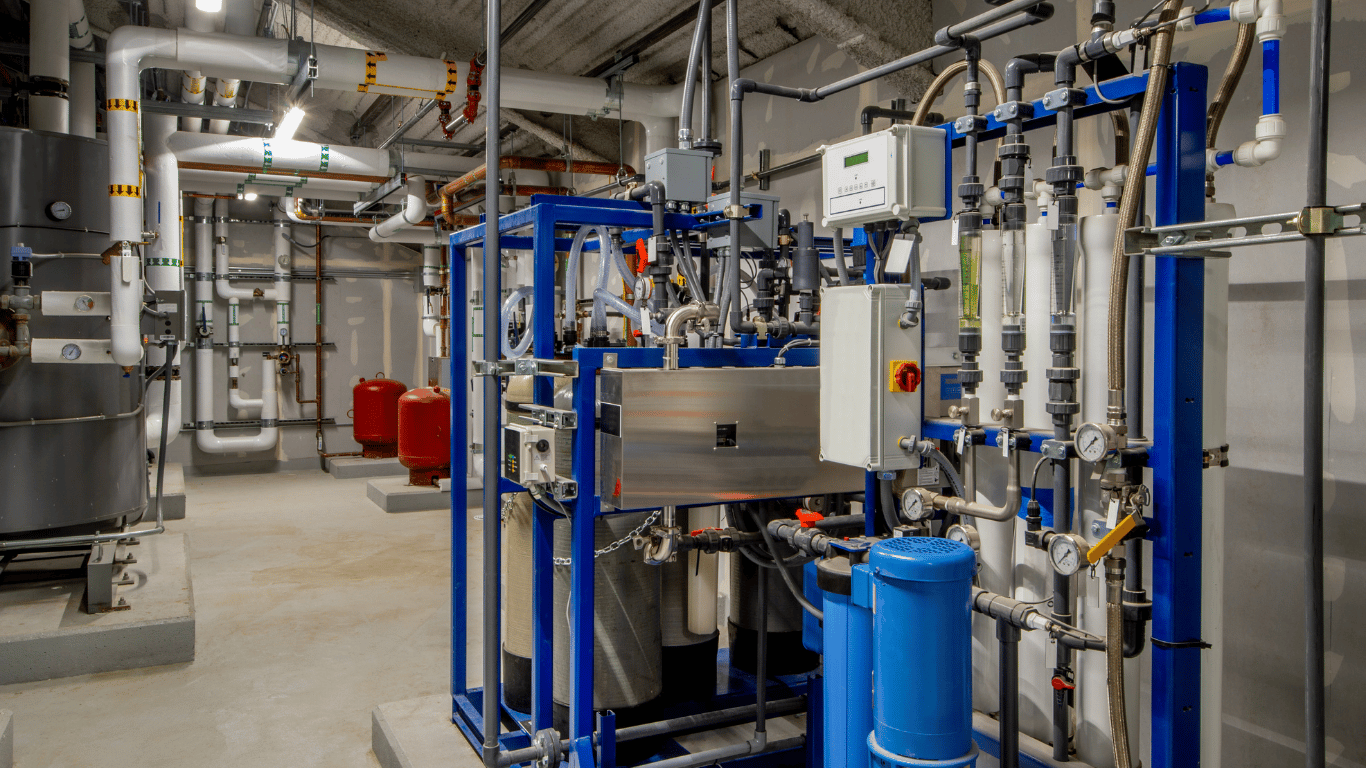
Reliable water quality plays an important role in commercial and industrial operations. R2J Chemical Services provides commercial water filtration and chemical water treatment solutions in Bradenton, FL, to help facilities protect equipment, manage operating costs, and maintain dependable water systems. Each solution addresses the facility’s specific water quality requirements and operational needs.
Commercial Water Filtration for Bradenton Facilities
Commercial water filtration systems help remove suspended solids, sediment, and other targeted contaminants from water. In Bradenton, Florida, facilities that operate cooling equipment, boilers, and other water-dependent systems can benefit from filtration that addresses the specific conditions within their water supply and equipment.
For example, closed-loop cooling systems can accumulate fine debris during equipment assembly or routine maintenance. Oxygen can also contribute to iron oxide formation, introducing particles that circulate through the system. These contaminants can accelerate corrosion, damage pump seals, restrict flow, and increase maintenance requirements.
A properly selected filtration system helps capture suspended materials before they cause further problems. However, the right system depends on source water quality, system design, operating conditions, and the contaminants that water testing identifies. R2J evaluates these factors to recommend a practical treatment strategy for each commercial facility.
Water Treatment Solutions for Commercial and Industrial Systems
Filtration addresses specific physical contaminants, but many facilities also need additional water treatment to control mineral deposits, corrosion, and biological growth. R2J develops customized solutions for commercial and industrial water systems based on comprehensive testing and engineering specifications.
Water Filtration and Suspended Solids Removal
Filtration systems target particles that can interfere with water circulation and equipment performance. Depending on the application, treatment may include sediment filters, cartridge filtration, or other specialized technologies.
Facilities with closed-loop systems can benefit from filtration that removes debris introduced during installation, repairs, or ongoing operation. Proper filtration helps protect piping, pumps, and other components while supporting consistent system performance.
For additional guidance on choosing the appropriate equipment, read R2J’s article on commercial water filtration systems.
Water Softeners for Hard Water Control
Hard water contains dissolved minerals, particularly calcium and magnesium. When these minerals accumulate on heat transfer surfaces, plumbing, fixtures, and appliances, they can form scale buildup that reduces efficiency and increases cleaning and maintenance requirements.
Commercial water softeners use ion exchange to reduce hardness minerals in the water supply. High-capacity systems can support facilities with substantial water demands, while twin-tank configurations may help maintain a more continuous supply of softened water during regeneration.
The appropriate water softener depends on water hardness, peak flow rates, daily consumption, and the facility’s operating schedule. Water testing helps determine whether softening is necessary and how much treatment capacity the application requires.
Reverse Osmosis Systems for Dissolved Contaminants
Some commercial applications require more extensive treatment than conventional filtration or softening can provide. Reverse osmosis systems use a semipermeable membrane to reduce dissolved minerals and other targeted substances in water.
These systems can support applications that require tighter control over dissolved solids, including specialized manufacturing, laboratory operations, and selected food and beverage processes. The treatment requirements vary according to the intended use and the quality specifications the facility must meet.
Reverse osmosis systems also require careful consideration of pretreatment, operating pressure, membrane maintenance, and wastewater management. Facilities must evaluate the characteristics of their source water before selecting an appropriate system.
Drinking Water Systems and Disinfection
Commercial drinking water systems require treatment that matches the source water, intended use, and applicable health and safety requirements. Depending on the water quality concerns, treatment may involve particulate filtration, activated carbon, reverse osmosis, or disinfection technologies.
Activated carbon filtration can improve taste and odor by reducing chlorine and certain organic compounds. Ultraviolet (UV) disinfection can inactivate susceptible microorganisms when the system operates under appropriate conditions. However, neither technology addresses every possible contaminant, so the treatment combination must reflect the results of water testing.
Facilities should also maintain appropriate backflow prevention measures to protect potable water supplies from contamination. Routine inspections and required testing help support the integrity of the building’s water distribution system.
Custom Chemical Water Treatment for Boilers and Cooling Towers
Commercial water filtration is only one part of a comprehensive water management program. Boilers, cooling towers, and other water-using equipment may require chemical treatment to control scale, corrosion, and biological fouling.
R2J develops custom chemical formulations based on water testing, equipment requirements, and engineering specifications. These solutions help facilities manage water chemistry while supporting reliable equipment operation.
Cooling Tower Water Treatment
Cooling towers experience evaporation, which concentrates dissolved minerals and other substances in the circulating water. Without proper control, these conditions can contribute to scale formation, corrosion, and biological growth.
A suitable treatment program manages water chemistry and helps maintain operating conditions within the equipment manufacturer’s recommended limits. Depending on the system, the program may include scale and corrosion inhibitors, biocides, filtration, and monitoring.
Facilities can learn more about these considerations in R2J’s guide to cooling tower water treatment chemicals.
Boiler Water Treatment
Boilers require controlled water chemistry to minimize scale, corrosion, and other conditions that can interfere with heat transfer. Mineral deposits can insulate heating surfaces, increase energy consumption, and contribute to equipment damage.
A properly designed boiler water treatment program considers feedwater quality, operating pressure, condensate return, and other system requirements. Depending on the application, treatment may involve softening, oxygen control, chemical dosing, and routine water testing.
Consistent monitoring helps operators identify changes in water quality before they develop into more serious operating problems.
Biological Control and Water Management
Water systems can support microbial growth when operating conditions allow organisms to multiply or form biofilms. These issues can affect water quality, maintenance needs, and occupant safety, particularly in systems that require specific microbial controls.
R2J provides water management support that can include Legionella testing, prevention, remediation, and ongoing treatment strategies. Its LAMPS® cloud-based software solution supports customized Legionella Assessment and Management Plan activities.
Facilities should align their water management procedures with the risks associated with their systems, applicable requirements, and the recommendations of qualified water treatment professionals.
How to Select the Right Commercial Water System
Choosing a commercial water filtration system requires more than comparing equipment capacity or purchase price. The system must address actual water quality concerns while meeting the facility’s flow requirements, treatment objectives, and maintenance capabilities.
Several factors help determine the right approach.
Source water quality: Municipal water and well water can present different treatment requirements. Testing helps identify hardness, iron, chlorine, suspended solids, dissolved minerals, and other relevant parameters.
Application requirements: Drinking water systems, cooling towers, boilers, and specialized manufacturing processes require different water quality specifications. Ultrapure water applications, for example, may need advanced treatment to meet applicable USP or ASTM specifications.
Peak flow and demand: Commercial systems often operate for longer hours than residential systems. Engineers should size equipment for expected peak flow rates and demand patterns rather than average consumption alone.
Equipment protection: The treatment plan should account for existing plumbing, heat exchangers, pumps, fixtures, and other components that may suffer from scale, corrosion, or particle accumulation.
Maintenance and operating costs: Filter replacement, chemical consumption, membrane cleaning, regeneration, and routine testing all affect the total cost of ownership. A suitable design balances treatment performance with practical operating requirements.
Regulatory considerations: Installations must meet applicable plumbing codes and other relevant requirements. Facilities should also maintain required backflow prevention inspections and testing to protect potable water systems.
Benefits of Professional Water Treatment in Bradenton, FL
A properly designed water treatment program can help commercial and industrial facilities manage water quality more consistently. The benefits depend on the source water, treatment technology, equipment condition, and maintenance practices.
Improved equipment protection: Appropriate filtration and chemical treatment help control particles, scale, corrosion, and biological fouling that can affect water-using equipment.
More predictable maintenance: Routine testing and monitoring help operators identify developing water quality problems and schedule corrective action before conditions become more disruptive.
Better operational efficiency: Controlling scale and suspended solids can help maintain heat transfer and water circulation, reducing avoidable strain on equipment.
Application-specific water quality: Facilities can select treatment technologies that match their intended use, from general commercial water filtration to reverse osmosis and specialized drinking water systems.
More informed operating decisions: Water testing provides measurable information about treatment performance, helping facility managers adjust maintenance schedules and treatment programs as conditions change.
These benefits depend on proper system design, appropriate operation, and ongoing maintenance. No single filtration technology can address every water quality issue, so professional assessment remains important.
Commercial Water Filtration Services in Bradenton, FL
R2J Chemical Services helps commercial and industrial facilities in Bradenton, FL, address water quality challenges through customized filtration and chemical treatment solutions. The team evaluates system conditions and treatment requirements to develop an approach that supports equipment reliability and operational needs.
Starting from suspended solids removal in closed-loop cooling systems to chemical treatment for boilers, cooling towers, and potable water applications, R2J tailors its recommendations to the facility rather than relying on a one-size-fits-all solution.
Get Started with Commercial Water Treatment in Bradenton
Improving a commercial water system starts with understanding the water entering your facility and the demands of the equipment it serves. First, arrange comprehensive water testing. Next, identify the treatment requirements for your application, evaluate the appropriate filtration and chemical treatment options, and establish a maintenance and monitoring plan. R2J Chemical Services can help your team determine the right solution for your facility in Bradenton, FL.
Contact us today to discuss your commercial water filtration and chemical water treatment needs.
Frequently Asked Questions (FAQ)
What type of commercial water filtration system does my Bradenton facility need?
The right system depends on source water quality, the contaminants present, peak flow rates, and the intended application. Water testing helps determine whether the facility needs sediment filtration, activated carbon, water softening, reverse osmosis, or a combination of treatment technologies.
Can commercial water filtration systems remove hard water minerals?
Standard sediment filters generally do not remove dissolved hardness minerals. Commercial water softeners use ion exchange to reduce calcium and magnesium, while reverse osmosis systems can reduce dissolved minerals as part of a broader treatment process.
Do commercial facilities need both filtration and chemical water treatment?
Some facilities benefit from both approaches because they address different water quality concerns. Filtration removes targeted suspended particles, while chemical treatment can help control scale, corrosion, and biological growth in systems such as boilers and cooling towers. The appropriate combination depends on the equipment and water chemistry.
How often should a commercial water filtration system receive maintenance?
Maintenance schedules depend on the technology, water quality, operating hours, and contaminant loading. Facilities should follow equipment manufacturer recommendations and use routine inspections, performance checks, and water testing to determine when filters, membranes, or other components require service.
How can R2J help improve my facility’s water quality in Bradenton, FL?
R2J evaluates water quality and equipment requirements to recommend customized filtration and chemical treatment solutions. To get started, facility managers can arrange a professional assessment, review their water testing results, identify operational concerns, and discuss a treatment program tailored to their system.

 Ed Sobolewski
