Water Treatment for Cooling Towers: The Basics
Cooling towers play a vital role in removing heat from HVAC and process systems for commercial and industrial facilities. However, the same evaporation process that makes cooling towers effective also concentrates minerals and contaminants in the circulating water. A properly designed water treatment program helps facilities maintain reliable cooling, protect equipment, and manage water use.
How Do Cooling Towers Work?
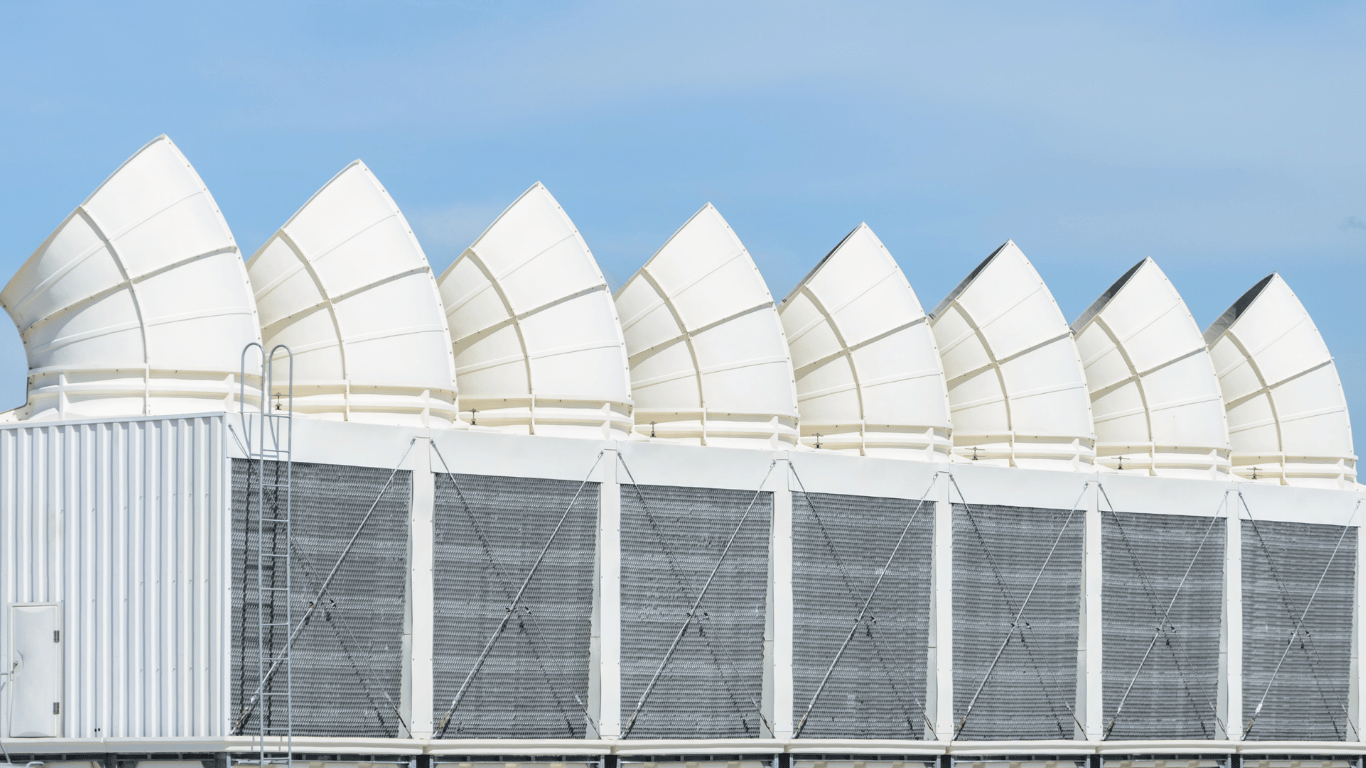
Cooling towers reject heat by circulating warm water through the tower while air moves across the water. A small portion of the water evaporates, carrying heat away from the system and lowering the temperature of the remaining cooling water. The cooled water then returns to the system to absorb more heat.
This process creates a continuous cycle of evaporation and recirculation. As water evaporates, however, dissolved minerals remain behind. The concentration of these minerals increases over time, while dust, particles, airborne contaminants, and other materials can enter the basin. Without proper control, these conditions can affect heat transfer and overall system efficiency.
Why Does Cooling Tower Water Need Treatment?
Cooling tower water needs treatment because evaporation naturally concentrates dissolved minerals and contaminants. Calcium, salts, silica, and other dissolved materials can accumulate as the system operates. Suspended solids can also settle in the basin and circulating water, creating additional cleaning and maintenance challenges.
Poor water quality can contribute to scale formation, corrosion, biological growth, and fouling. Scale deposits can insulate heat transfer surfaces and reduce heat exchange, while corrosion can damage metal components and produce iron oxide that circulates through the system. Biological growth can create bacterial slime and biofilm that restrict water flow and interfere with efficient operation.
These problems can also increase energy use and equipment damage. A cooling system that struggles to transfer heat may need to operate longer or work harder to maintain the required temperature. Consistent water treatment addresses these risks before they develop into more expensive operating problems.
What Does Cooling Tower Water Treatment Control?
A complete treatment program focuses on several aspects of water quality rather than relying on a single solution. The treatment strategy typically considers scale, corrosion, suspended solids, biological growth, pH, conductivity, and the concentration of dissolved minerals.
Scale prevention remains one of the most important goals. As salt concentration and dissolved minerals rise, compounds such as calcium carbonate can form deposits on heat transfer surfaces. Chemical treatment, filtration, water softening, and controlled blowdown can work together to keep these materials within an acceptable range.
Corrosion control also protects cooling equipment and heat exchangers. Treatment programs may use corrosion inhibitors alongside proper pH control and conductivity management. The right approach depends on the system materials, operating conditions, makeup water, temperature, and treatment requirements.
The Role of Filtration in Cooling Tower Treatment
Physical filtration removes suspended solids from cooling tower water. Filters can capture contaminants such as rust, silt, dust, and other particles that enter the system through makeup water or the surrounding air. Cartridge filters, for example, commonly target particles in the approximate 5- to 20-micron range.
Side-stream filtration can continuously remove a portion of the contaminants from recirculating water rather than waiting for solids to accumulate in the basin. Many systems filter a portion of the total circulation rate, allowing the filtration equipment to improve water quality without treating the entire flow at once.
Effective filtration can also reduce the conditions that support bacterial slime and fouling. As a result, filtration may reduce the demand for chemical treatment while helping the cooling tower maintain better heat transfer. Facilities can also combine filtration with other treatment technologies when the cooling water contains particularly high levels of contaminants.
Chemical Treatment for Cooling Towers
Chemical treatment helps control problems that mechanical filtration cannot address on its own. A properly selected program may include corrosion inhibitors, scale-control chemicals, dispersants, and biocides. Each chemical serves a specific purpose, and treatment concentrations must match the operating conditions of the cooling system.
Biocides help control microorganisms that can grow in the warm, wet environment of cooling towers. Uncontrolled biological growth can contribute to biofilm, bacterial slime, odors, fouling, and other water quality concerns. Facilities should also manage microbial risks as part of a broader water management strategy. R2J provides additional information about biofilm control in water systems.
Chemical selection should account for water chemistry, equipment materials, discharge requirements, operating temperatures, and the overall treatment objective. Simply adding more chemicals does not necessarily produce better results. The treatment program should maintain appropriate control ranges while avoiding unnecessary chemical use.
Managing Scale, Corrosion, and Biological Growth
Scale and corrosion often develop together with changes in water chemistry. Increasing concentrations of dissolved minerals can push the water toward scale formation, while unsuitable pH or inadequate inhibitor levels can accelerate corrosion. Biological activity can further complicate the system by creating deposits and localized conditions that affect metal surfaces.
Cooling tower treatment therefore requires balance. Operators need to maintain the water within an appropriate chemical range while controlling contaminants and microorganisms. Routine testing provides the information needed to adjust treatment before a small change becomes a larger operating issue.
Facilities can also use automated monitoring to track conductivity, pH, chemical residuals, and other important parameters. Automated systems provide more consistent control and can help operators respond quickly when water conditions move outside the desired range.
Cycles of Concentration and Blowdown
Cycles of concentration describe how much dissolved material accumulates in cooling tower water compared with the makeup water entering the system. As evaporation removes water but leaves minerals behind, the concentration rises. Operators use blowdown, also called bleed-off, to remove mineral-heavy water and replace it with fresh makeup water.
Many cooling towers can operate effectively around four to six cycles of concentration when water chemistry and system conditions support that range. The ideal concentration level varies, however, because water hardness, alkalinity, silica, treatment chemistry, equipment design, and local water quality all affect system performance.
Increasing cycles can reduce water consumption because the system needs less blowdown. At the same time, excessive concentration can increase the risk of scale formation and other water quality problems. Facilities should therefore optimize cycles rather than simply pushing concentration as high as possible. R2J explains this relationship in more detail in its guide to cooling tower cycles of concentration and control.
Makeup Water and Water Quality
Makeup water replaces water lost through evaporation, blowdown, drift, and other operating processes. Its quality directly influences the cooling tower because every dissolved mineral entering with the makeup water can become more concentrated as evaporation continues.
Hard water can introduce calcium and magnesium that contribute to scale formation. High conductivity or total dissolved solids can also limit how far operators can increase cycles of concentration. Facilities with challenging water supplies may consider softening, filtration, reverse osmosis, or other pretreatment technologies to improve the makeup water.
Soft water can allow higher cycles of concentration under suitable conditions, potentially reducing blowdown and supporting water conservation. However, pretreatment should match the actual water chemistry and system requirements. An unnecessary treatment step can add cost without producing a meaningful operational benefit.
Why Cooling Tower Cleaning Still Matters
Water treatment helps prevent deposits and biological growth, but it does not eliminate the need for routine cleaning and inspection. Dirt, scale, sediment, algae, and biological material can accumulate in basins and other parts of the system even when treatment operates correctly.
Routine inspections allow operators to identify changes in water condition, damaged components, clogged strainers, unusual deposits, and other problems. Cleaning also removes accumulated material that chemical treatment and filtration may not fully address.
A maintenance program should consider the tower basin, fill, drift eliminators, valves, piping, heat exchangers, and other equipment that comes into contact with cooling water. Consistent cleaning supports water quality and helps the treatment program perform as intended.
Monitoring Cooling Tower Water Quality
Testing provides the data needed to manage a cooling tower effectively. Operators may monitor pH, conductivity, hardness, alkalinity, chemical residuals, temperature, microbial activity, and other parameters depending on the system and treatment program.
Conductivity provides useful information about the concentration of dissolved minerals and can help control blowdown. pH affects corrosion, scale formation, and the performance of certain treatment chemicals. Microbiological monitoring can help identify changes that require additional attention.
Automated monitoring can make this process more consistent. Sensors and controllers can track selected parameters continuously and trigger chemical feed or blowdown adjustments when conditions change. This approach gives operators better control over water quality and can reduce unnecessary water and chemical consumption.
The Benefits of a Proper Treatment Program
A well-managed cooling tower water treatment program protects equipment while supporting efficient operation. It helps control scale, corrosion, biological growth, suspended solids, and excessive mineral concentration before these issues interfere with heat transfer.
Better water quality can also support better heat transfer and more predictable system performance. When heat exchange surfaces remain cleaner, cooling equipment can operate more effectively. Facilities may also reduce maintenance requirements, water waste, chemical overuse, and premature equipment damage.
Water conservation represents another important benefit. Optimized cycles of concentration and blowdown can reduce the amount of fresh water the system requires. Some facilities can achieve additional savings through filtration, automated controls, water reuse, or advanced treatment technologies.
What Should a Cooling Tower Treatment Program Include?
Every cooling tower has different operating conditions, so the treatment program should begin with an assessment of the system and its water supply. Technicians should evaluate the tower design, heat exchangers, circulating water, makeup water quality, system volume, operating temperature, materials, and discharge requirements.
The next step involves establishing appropriate water quality targets and selecting treatment methods that address the actual risks. Those methods may include filtration, chemical treatment, softening, blowdown control, automated monitoring, and microbial control.
The program should then include routine testing, inspections, cleaning, and adjustments. Treatment works best as an ongoing management process rather than a one-time chemical application. Operators can use test results and system performance data to refine the program as conditions change.
Steps for Effective Water Treatment for Cooling Towers
Start with a complete assessment of the cooling towers, water supply, equipment, and operating conditions. Next, test the makeup and circulating water to identify hardness, conductivity, pH, suspended solids, and other relevant parameters. Use those results to establish appropriate treatment targets.
From there, select the right combination of filtration, chemical treatment, water softening, microbial control, and blowdown management. Install monitoring and control equipment where it can improve consistency and response time. Finally, maintain a regular schedule for testing, inspection, cleaning, and treatment adjustments.
R2J Chemical Services can help facilities develop a cooling tower water treatment program based on their equipment, water quality, operating requirements, and maintenance goals. Learn more about R2J’s cooling tower water treatment services and contact our team to discuss a treatment strategy for your facility.
Frequently Asked Questions (FAQ)
What is water treatment for cooling towers?
Water treatment for cooling towers uses chemical, mechanical, and operational methods to control scale, corrosion, biological growth, suspended solids, and mineral concentration. The goal is to maintain water quality while protecting equipment and supporting efficient cooling operation.
Why is cooling tower water treatment important?
Cooling towers concentrate dissolved minerals as water evaporates. Without proper control, those minerals and other contaminants can contribute to scale, corrosion, fouling, and biological growth. Treatment helps maintain heat transfer, protect equipment, and manage water consumption.
How often should cooling tower water be tested?
Testing frequency depends on the tower design, water quality, treatment chemistry, operating conditions, and facility requirements. Many facilities monitor key parameters regularly and use automated controls for continuous measurement of selected conditions.
What chemicals are used in cooling tower water treatment?
Common treatment chemicals include corrosion inhibitors, scale-control chemicals, dispersants, and biocides. The appropriate chemicals and dosage depend on the cooling water chemistry, system materials, operating conditions, and treatment objectives.
Can cooling tower water treatment reduce water consumption?
Yes. Optimized treatment can help facilities operate at appropriate cycles of concentration and reduce unnecessary blowdown. Filtration, softening, automated monitoring, and other treatment technologies can also support water conservation when they suit the system’s water quality and operating requirements.

 Tony Toscano
