Clean-In-Place (CIP) Systems for Process Equipment
Feb 05, 2026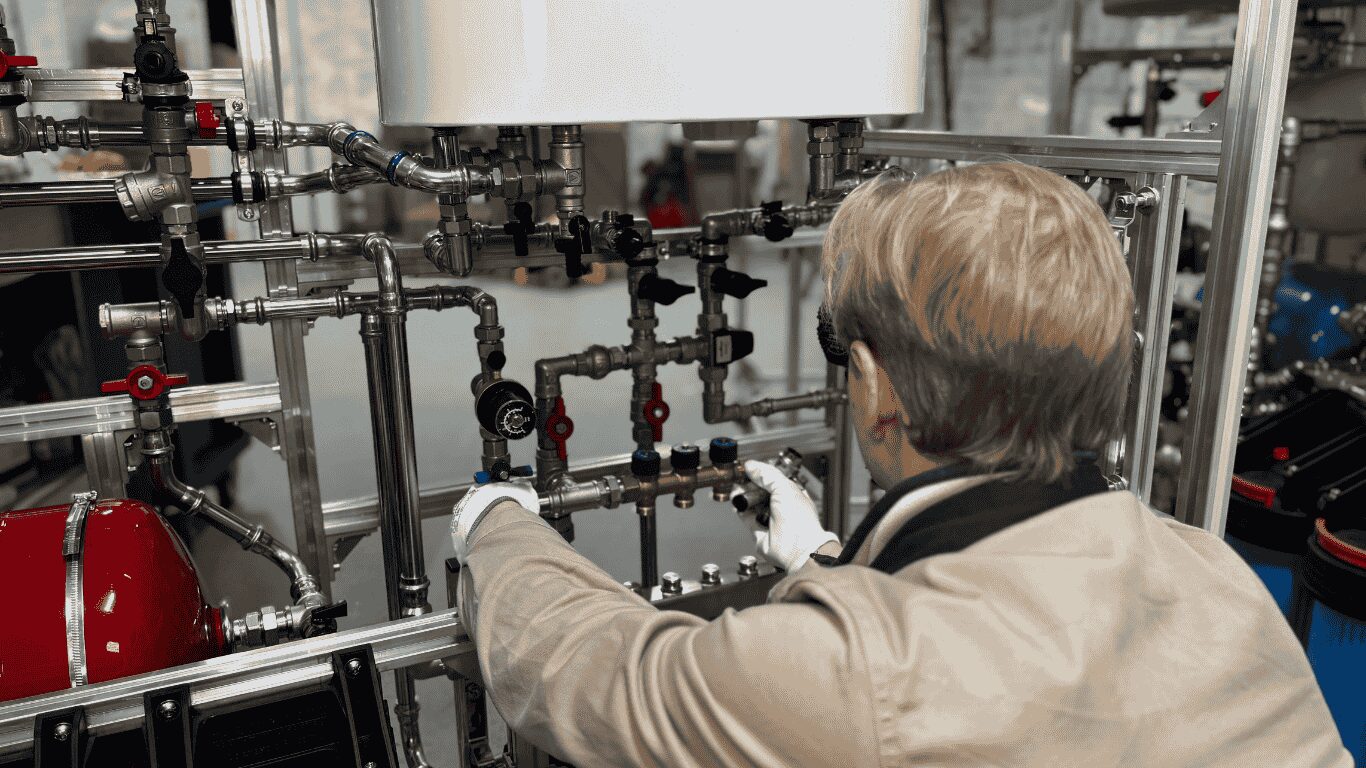
Clean in place has become a foundational practice in today’s processing facilities, not because it is convenient, but because it is necessary. As production demands increase and systems become more complex, keeping process equipment clean without constant disassembly is no longer optional. Operators need consistency, repeatability, and confidence that internal surfaces are being cleaned thoroughly every time.
CIP systems support that goal by providing an automated method for managing the cleaning process within closed production environments. Instead of relying on manual intervention, facilities can control flow, chemistry, and timing to protect product quality and equipment integrity. Across food, beverage, pharmaceutical, and industrial applications, clean in place continues to shape how modern operations maintain hygiene, efficiency, and operational reliability.
What Clean-In-Place Really Means in Day-to-Day Operations
When operators talk about clean in place, they are usually talking about predictability. It is the ability to clean internal piping, tanks, and food contact surfaces without opening equipment or interrupting the production layout. Clean in place CIP is designed to move cleaning fluids through closed systems in a controlled way, reaching areas that are difficult or unsafe to access by hand.
One common misconception is that place CIP removes the need for human oversight. In reality, it reduces the risks and inconsistencies that come with manual cleaning. Disassembly takes time, introduces variability, and increases the chance of missed residues or recontamination during reassembly. Operators who have spent hours breaking down equipment know how labor intensive that approach can be.
Clean in place shifts the focus from physical access to process control. When designed correctly, it delivers consistent cleaning performance, protects equipment surfaces, and supports repeatable results day after day. This is why many facilities now view clean in place not as an upgrade, but as a baseline requirement for modern operations.
How CIP Systems Are Built and How They Function
Most cip systems share a common architecture, even though their size and automation level can differ. A typical cip system includes tanks, pumps, valves, and return piping that operate together as a single cleaning system. Each component matters, and when one piece is undersized or poorly arranged, cleaning performance quickly drops.
The core of many cip systems is a skid that stores and circulates cleaning solutions through the loop. Pumps provide the force needed to move fluids, while automated valves route flow to specific circuits. Sensors are often used to monitor key conditions during operation, helping operators confirm that the system is performing as intended throughout each cycle.
This cleaning equipment connects directly to process lines, vessels, heat exchangers, and other equipment through sanitary tie-ins. Associated fittings allow the system to access internal surfaces without disassembly, which reduces downtime and risk. When cip systems are designed as part of the overall process instead of added later, they avoid common issues like poor drainage and flow restrictions that limit cleaning effectiveness.
The CIP Process Step by Step
The cip process follows a defined sequence that is designed to remove soils efficiently while protecting process equipment. While every facility has its own variations, the structure of a typical cip cycle stays fairly consistent. The goal is not speed, but control. Flow, chemistry, and timing all work together to deliver repeatable results during each cleaning cycle.
Most systems begin with a pre rinse using rinse water to flush out loose product and reduce the overall soil load. This step is often overlooked, but it plays a critical role in preventing excessive dilution of cleaning solutions later in the cip cycle. Once visible residues are removed, the system transitions into the main wash phase, where detergents circulate at controlled flow rates and temperatures. This is the heart of the cip process and where mechanical action and chemistry do the heavy lifting.
After the wash phase, the system moves into one or more rinses to remove remaining chemicals and suspended soils. A final rinse is used to clear the system completely and prepare it for the next production run. Final rinse water quality matters here, especially in sensitive applications, because any residue left behind can affect product quality. Clean in place works best when each step is allowed to run its full course rather than being rushed to meet production schedules.
Cleaning Chemistry and the Role of Chemical Control
Chemistry is what turns circulation into actual cleaning. Without the right cleaning agents, even the best designed system will struggle to remove residues from internal surfaces. Operators should think of cleaning chemicals as tools, each selected to address specific soils while protecting equipment materials and seals. The goal is balance, not strength, because overly aggressive chemistry often creates more problems than it solves.
Most CIP programs rely on a combination of alkaline and acidic cleaning solutions. Sodium hydroxide is commonly used to break down fats, proteins, and organic residues, while an acid solution targets mineral scale and inorganic buildup. Phosphoric acid is frequently selected for this role because it is effective at dissolving mineral deposits without being overly harsh on stainless steel. What matters most is chemical concentration. Too low and soils remain, too high and equipment damage, safety risks, and chemical costs increase.
Consistent chemical delivery is just as important as chemical selection. Variations in dosing can lead to uneven results from one cycle to the next. Automated feed and monitoring help maintain stable conditions and support repeatable performance across the cleaning process. For facilities looking to improve accuracy and control, it is worth reviewing how chemical feed systems support reliable cleaning operations. You can explore this further in our guide on chemical feed system design and operation.
Spray Coverage, Flow, and Mechanical Action
Spray coverage is one of the most overlooked elements in CIP design, yet it has a direct impact on cleaning efficiency. Other spray devices, such as spray balls, are responsible for delivering cleaning fluids to interior surfaces that cannot be reached by flow alone. When coverage is uneven or insufficient, soils remain even if the chemistry and temperature are correct.
A static spray ball relies on flow rate and pressure to distribute cleaning fluids in a fixed pattern. This approach works well for simple vessels with predictable geometry, but it can struggle with complex internal surfaces or shadowed areas. In those cases, dynamic spray devices provide rotating or oscillating action that improves impact and coverage. Operators often see better results when spray selection matches vessel size, shape, and soil type rather than defaulting to a one-size solution.
Mechanical action created by proper spray design helps dislodge residues and keep soils suspended so they can be carried out of the system. When spray devices are undersized or poorly positioned, cleaning performance drops and cycle times increase. Paying attention to spray coverage during system design or review is one of the simplest ways to improve results without changing chemistry or extending cleaning time.
Temperature, Time, and Flow as Critical Parameters
Every CIP program depends on a few critical parameters, and temperature, time, and flow are the ones that most often determine success or failure. In daily cip operations, these elements must stay in balance. When temperatures drop, flow rates vary, or contact time is shortened, cleaning results become inconsistent even when the chemistry is correct.
Heat improves reaction rates and helps break down soils, which is why heat exchangers play such an important role in many systems. Time allows cleaning solutions to do their job, especially in long or complex circuits. Flow delivers solution to all targeted areas and provides the mechanical energy needed to remove residues from internal surfaces.
Velocity also helps carry soils back to the return without redepositing them. Some systems use compressed air to assist with draining or purging, but it should support, not replace, proper hydraulic design. When these parameters are aligned, facilities consistently deliver solution where it is needed and achieve effective cleaning without extending cycles or increasing chemical use. Steam quality and heat control directly affect cleaning reliability. For more on this, see our guide on maintaining proper steam quality in industrial systems.
Soil Types, Residues, and Why One Cycle Never Fits All
Not all soils are created equal, and understanding the soil load is essential to designing effective cleaning procedures. Organic soils, such as fats, proteins, and sugars from food products, behave differently from inorganic residues like mineral deposits. Operators who tailor their CIP cycles to the type and amount of soil see better results without wasting time or chemicals.
The cleaning process should match the challenge. Heavy soil loads may require longer or more aggressive cycles, while light residues can be removed efficiently with shorter, standard procedures. Over-cleaning not only wastes energy and chemicals but can also stress equipment, while under-cleaning risks contamination and compromised product quality.
Teams should monitor internal surfaces to confirm results and adjust cycles as needed. Even well-designed CIP systems cannot compensate for ignoring the characteristics of the soils present. Understanding the types of residues, their location, and how they interact with cleaning agents ensures clean surfaces consistently and protects both product quality and operational efficiency.
CIP Across Processing Industries
Clean in place is a versatile approach that adapts to the unique needs of different processing industries. In the food industry, CIP systems focus on removing fats, proteins, and sugars while maintaining strict hygiene on food contact surfaces. Beverage operations often deal with sugars and acids that can build up in piping, tanks, and heat exchangers, requiring careful selection of cleaning solutions and cycle parameters.
Dairy industry facilities rely on CIP to handle high-fat soils and milk residues that can spoil quickly if not removed. Proper CIP design ensures that internal surfaces and associated fittings are fully cleaned without interrupting production schedules. Meanwhile, pharmaceutical manufacturing and biopharmaceutical processes demand even higher levels of validation. Pharmaceutical systems often use precise chemical concentrations and controlled temperatures to guarantee compliance, protect product quality, and minimize cross contamination risks.
Across all these processing industries, CIP provides repeatable, automated cleaning that reduces manual labor while maintaining safety and efficiency. Operators can tailor cycles, chemical selection, and flow patterns to meet each industry’s requirements, ensuring consistent cleaning performance without compromising production throughput.
Water Quality and Its Impact on CIP Performance
Water quality plays a quiet but critical role in CIP performance. Even the best cleaning agents and well-designed cycles can be compromised if rinse water or cleaning fluids contain high mineral content, suspended solids, or microbial contamination. Poor water quality can reduce chemical effectiveness, leave deposits on internal surfaces, and even increase chemical costs over time.
Many facilities use reuse systems to conserve water, but these systems require careful monitoring to ensure that recycled water meets cleaning standards. Regular testing and water treatment help maintain consistent performance, supporting effective cleaning across multiple cycles without introducing contamination or buildup.
Operators who understand the water treatment context can make better decisions about chemical dosing, cycle timing, and final rinse procedures. For facilities dealing with hard water, mineral buildup is a common challenge. You can learn more about how hard water affects cleaning efficiency and equipment longevity in our guide on What Is Hard Water.
Validation, Verification, and Confidence in Results
Cleaning validation is the step that turns a completed CIP cycle into a verified result. It answers the critical question operators often ask: did the process actually remove soils and residues from product contact surfaces? Without validation, even well-designed cycles are just assumptions.
Teams verify cleaning using visual inspections, swabs, or chemical tests. Fluorescent tracers, such as riboflavin solution, make it easier to see whether internal surfaces received adequate coverage. UV lamps are commonly used to detect the tracer and confirm that no blind spots remain. These methods help operators identify gaps in spray coverage, flow, or chemistry before production resumes.
Consistent cleaning validation supports repeatable performance and reduces the risk of contamination or cross-contact. Operators gain confidence that soils are removed and that internal surfaces meet quality standards, which is especially critical in pharmaceutical systems or facilities handling sensitive food products.
Safety, Efficiency, and Operational Realities
CIP systems improve efficiency, but personnel safety should always guide operations. Automated methods reduce exposure to hot fluids, chemicals, and moving parts, limiting the risks associated with labor intensive manual cleaning. Operators should still monitor cycles to ensure valves, pumps, and spray devices function correctly and that no unexpected hazards arise.
Understanding cleaning requirements is key to avoiding cross contamination issues. Even with a well-designed CIP system, shortcuts or skipped cycles can leave residues behind, especially in sensitive areas like product contact surfaces. Regular checks help teams catch early signs of problems before they affect production.
Balancing automation with hands-on observation ensures CIP systems deliver consistent results safely. Teams that integrate safety protocols, proper training, and standard operating procedures find cleaning cycles run more reliably, protect personnel, and maintain product quality without compromising efficiency.
Building a Stronger CIP Strategy for Your Facility
A well designed CIP system starts with understanding the full scope of your operations. Teams should evaluate the types of soils, the complexity of piping and vessels, and the flow paths of each place system. Matching cleaning solutions, cycle times, and spray coverage to these variables ensures that internal surfaces receive consistent attention without overusing chemicals or extending production downtime.
Operators should also consider integration with the production line. Cleaning cycles that run smoothly alongside regular operations reduce disruption and maintain efficiency. Monitoring and adjusting clean in place methods over time helps address changes in soil load, water quality, or product mix, keeping results reliable and repeatable.
For facilities looking to strengthen their approach, taking a holistic view of CIP operations pays off. Want expert guidance on optimizing cycles, selecting the right cleaning solutions, or improving spray coverage? R2J can help you build a CIP program that enhances efficiency, protects equipment, and safeguards product quality.
Frequently Asked Questions (FAQs)
What is the typical cleaning process in CIP systems?
The cleaning process in a CIP system involves circulating cleaning solutions through process equipment without disassembly. A typical CIP process includes pre-rinse, wash, and final rinse steps, each designed to remove soils, residues, and microbial contaminants. By following a controlled cycle, facilities can ensure consistent performance and reduce the risk of contamination.
How do cleaning agents and chemicals work in CIP cleaning?
Cleaning agents and cleaning chemicals target specific soils in process equipment. Alkaline solutions often remove fats and proteins, while acids dissolve mineral deposits on stainless steel surfaces. Proper chemical concentration is essential: too weak and soils remain, too strong and equipment or product quality may be compromised. Some facilities use CIP solutions that combine detergents and sanitizers for effective bacterial control.
Why are spray balls and dynamic spray devices important?
Spray balls and dynamic spray devices help distribute cleaning fluids across interior surfaces. Static spray balls are effective for simple tanks, while dynamic spray devices rotate or oscillate to reach complex geometries. Proper placement ensures that all internal surfaces, including hard-to-reach areas, receive adequate coverage and cleaning efficiency is maximized.
Can CIP systems be used in pharmaceutical manufacturing and food production?
Yes, clean in place CIP systems are widely used in both pharmaceutical manufacturing and food production. They reduce manual cleaning, minimize cross contamination issues, and help kill bacteria on process surfaces. Well-designed CIP cycles ensure that critical parameters, chemical concentrations, and flow patterns meet stringent regulatory and safety standards.
How do facilities choose the right CIP solutions for different processing plants?
Choosing CIP solutions depends on the type of process equipment, soils, and production requirements. Facilities evaluate factors like soil load, material compatibility, and desired sanitization. CIP systems can be tailored to deliver the appropriate cleaning chemicals, flow rates, and spray coverage, whether for dairy, beverage, or pharmaceutical processes, ensuring that every cycle consistently meets cleaning and hygiene goals.

 Tony Toscano